


An in-depth look at the procedures for maintaining the performance of piston pumps over time
High-pressure pumps are essential components in numerous industrial sectors, ranging from professional cleaning to fertigation, from water treatment to machining; however, like any industrial equipment, they require specific attention and care to perform at their best. When it comes to reliability and operational continuity, scheduled maintenance is crucial for ensuring optimal performance over time.
In this article, we will walk you through the maintenance procedures for high-pressure pumps, providing a comprehensive guide that covers everything from daily checks to major maintenance tasks. You will find practical advice on maintenance schedules, the procedures to follow, and the necessary safety checks.
Why is maintenance of high-pressure pumps essential?
Proper maintenance of high-pressure pumps is not merely a best practice; it is a strategic investment for any industrial operation. Let’s take a look at the key benefits of a scheduled maintenance program.
- Extended service life: a well-maintained pump can last significantly longer than one that is neglected. Regular replacement of wear-prone components and constant monitoring of operating parameters prevent premature material deterioration, ensuring years of reliable service.
- Failure prevention and cost reduction: Unexpected downtime can cost far more than scheduled maintenance. Identifying and resolving minor issues before they escalate into major failures helps avoid costly emergency repairs and lost productivity. An unplanned outage can result not only in repair costs but also in costs associated with the interruption of production activities.
- Optimal performance: Over time and with use, pumps may experience a decline in performance, such as inconsistent pressure, reduced flow rate, or decreased efficiency. Regular maintenance ensures that the pump always operates within its design parameters, guaranteeing the quality of the final result.
- Operational safety: A poorly maintained pump can pose a safety risk to operators. Sudden leaks, failures of pressurized components, or malfunctions can create dangerous situations. Regular inspections allow potential safety issues to be identified and resolved before they become critical.
- Warranty validity: Finally, it is important to remember that most manufacturers, including Mixtron, make warranty coverage contingent upon performing maintenance in accordance with the instructions in the manual. Neglecting maintenance can therefore result in the loss of coverage in the event of a malfunction.
Maintenance schedules for high-pressure pumps: when to perform maintenance
To ensure that high-pressure pumps operate properly, it is essential to follow a structured maintenance schedule. At Mixtron, we distinguish between two types of maintenance:
- Routine maintenance: this includes all inspections and checks that the operator can perform independently. These tasks are essential for the daily monitoring of the pump’s condition.
- Major maintenance: this includes more complex tasks, such as replacing internal components, which require greater expertise and the assistance of specialized personnel or an authorized service center.
Below is a complete list of the recommended frequencies for each type of procedure:
| Frequency | Type | Operations |
|---|---|---|
| Every workday | Routine | Check oil level Check the condition of the suction filter |
| Every 50 hours of work | Routine | Checking pump fasteners Inspecting piping and fittings |
| Every 500 hours or once a year | Major maintenance | Oil change |
| Every 1,000 hours of work | Major maintenance | Pump gasket replacement Valve replacement |
The frequencies listed in the table represent the standard parameters recommended by Mixtron. However, under particularly demanding operating conditions or in harsh environments, it may be necessary to increase the frequency of inspections.
Routine maintenance of high-pressure pumps
Routine maintenance is at the heart of daily care for a high-pressure pump. These are simple yet essential tasks that any operator can perform independently, without the need for special equipment or specific technical skills. When performed regularly, these tasks help keep the pump running efficiently over time and allow for the early detection of any issues before they escalate into more serious failures.
Checking the oil level of the pump
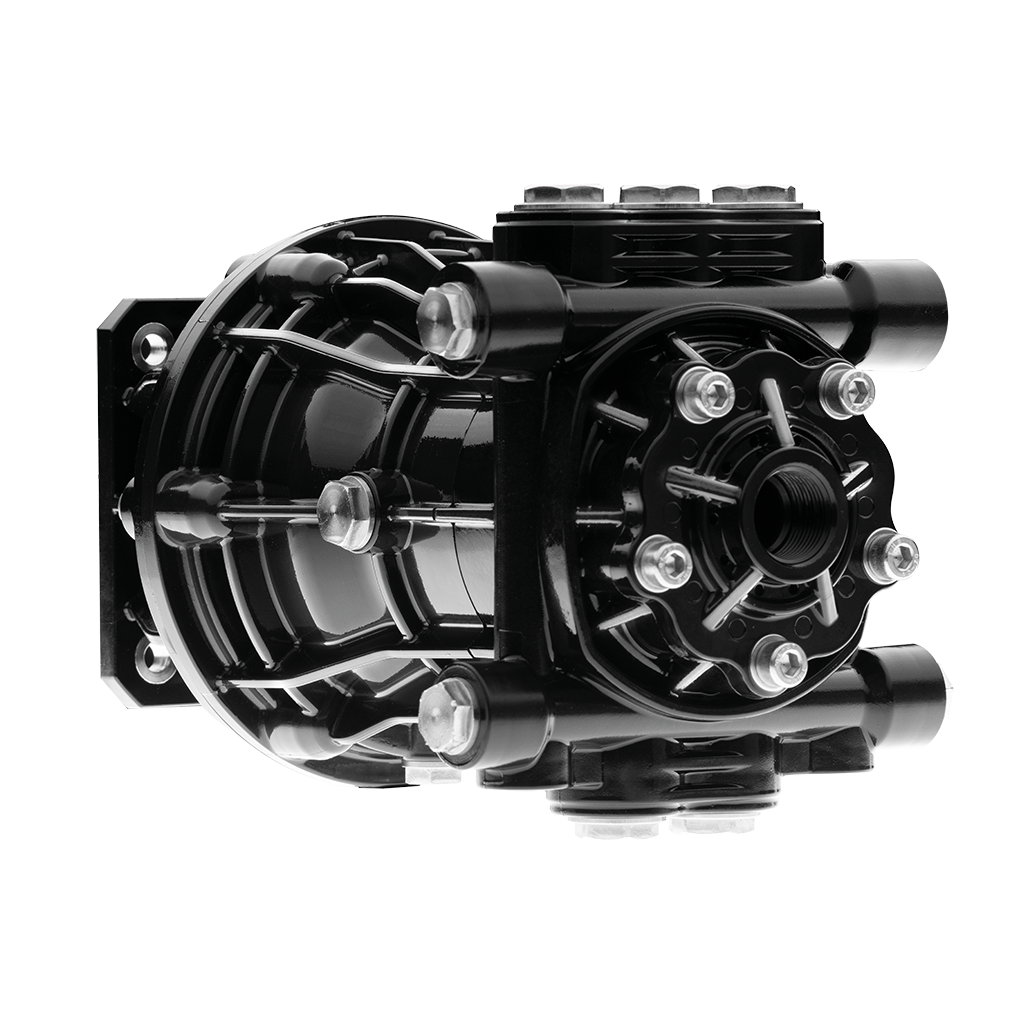
Checking the oil level is an essential daily task. This check should be performed with the pump shut off and completely cooled, and the machine positioned on a perfectly level surface to ensure an accurate reading.
Inspection procedure:
- Locate the oil level indicator on the pump housing
- Check that the oil level is at the midpoint of the indicator
- Top up the oil if necessary
Refill procedure:
- Unscrew the top filler cap
- Pour in the oil gradually until the correct level is reached
- Screw the cap back on
It is essential to use only the type of oil specified in the pump user manual (for us at Mixtron, the oil must be SAE 75W90). Using oils that do not meet the specifications can compromise lubrication and damage internal components, and will also void the manufacturer’s warranty.
Check the condition of the pump's suction filter
The suction filter serves as the first line of defense for the pump. It must be checked daily, before starting operations, to ensure that the suction circuit is functioning properly. Refer to the plumbing system's user and maintenance manual to verify that the filter cartridge is not clogged or damaged.
Signs that the filter needs to be replaced:
- Reduced pump flow rate
- Difficulty priming or longer priming times
- Decreased pressure performance
- Air entering the suction circuit
- Abnormal vibrations during operation
If the filter cartridge is clogged or damaged, consult the filter manufacturer’s instructions to restore its original filtering capacity or replace it. Never attempt to operate the pump with a compromised filter: this can cause contaminants and solid particles to enter the system, irreversibly damaging valves, pistons, and gaskets. The recommended filtration rating for high-pressure pumps is generally between 50 and 80 mesh.
Check pump fasteners
After approximately 50 hours of operation, and every 50 hours thereafter, you must check that the screws securing the flange and the head to the main body are tight. Vibrations during operation can gradually loosen the screws.
Inspection procedure:
- Shut down the pump completely and disconnect the power supply
- Wait until the pump has cooled down completely
- Visually inspect all screws securing the pump to the support structure
- Use a torque wrench to check that the fasteners are properly tightened
- If necessary, tighten the screws to the torque specified in the installation plan or the manufacturer’s manual
Consequences of improper tightening:
- Abnormal vibrations and excessive noise
- Crankshaft misalignment
- Excessive stress on internal components
- Premature wear of bearings and gaskets
- Potential fatigue failure of structural components
Always follow the torque specifications provided by the manufacturer: insufficient tightening can cause the problems listed above, while excessive tightening can damage the threads or deform the components.
Inspection of pump piping and fittings
Every 50 hours of operation, a thorough inspection of the entire hydraulic system must be performed. This inspection allows potential problems to be identified before they become critical and cause machine downtime or, worse still, hazardous situations.
Checking for leaks at the connections
Check that there are no fluid leaks from the fittings in either the suction or discharge lines. Leaks can usually be eliminated by properly tightening the fittings.
Pay special attention to the connections in the suction line: even small air leaks can seriously compromise the pump’s performance, causing:
- Pressure loss
- Cavitation
- Irregular operation
- Reduction in actual flow rate
- Valve damage
To ensure proper sealing, all connections between fittings and piping must be thoroughly sealed with appropriate gaskets and materials that are compatible with the pumped fluid.
Inspection of flexible hoses
Carefully inspect the condition of all hoses, ensuring that they do not exhibit:
- Cracking or hardening due to material aging
- Breaks, cuts, or punctures, even small ones
- Abnormal bulging indicating structural failure
- Abrasion caused by rubbing against other components or surfaces
- Permanent deformation or excessive bending
Any hose exhibiting any of these symptoms must be replaced immediately to prevent sudden ruptures while under pressure, which could cause injury to people or damage to surrounding equipment. Remember that hoses operating at high pressure are subject to significant stress, and their integrity is critical to safety.
Check the tightness of the suction connections
It is essential that all connections in the suction circuit are completely sealed. To check for leaks:
- With the pump turned off, visually inspect all connection points
- Check for any signs of previous leaks (stains, deposits, oxidation)
- Check that the fasteners are tightened evenly and correctly
- If necessary, restore the seal by replacing any worn gaskets
The suction system operates under negative pressure, and any air ingress compromises the pump's efficiency. The negative suction pressure must not exceed 0.25 bar, measured at the pump inlet.
If leaks or abnormalities are detected, stop using the pump immediately and correct the issue before restarting the equipment.
Major maintenance of high-pressure pumps
Extraordinary maintenance involves more complex procedures that require greater technical expertise and, in some cases, specialized equipment. These procedures are essential for maintaining the long-term efficiency of the high-pressure pump and preventing major breakdowns. While some tasks can be performed by experienced operators, others necessarily require the assistance of specialized personnel or a manufacturer-authorized service center.
It is important to note that, in order to maintain the warranty and ensure safe operation, it is essential to use only genuine replacement parts and to strictly follow the instructions in the user manual provided by the manufacturer.
Pump oil change
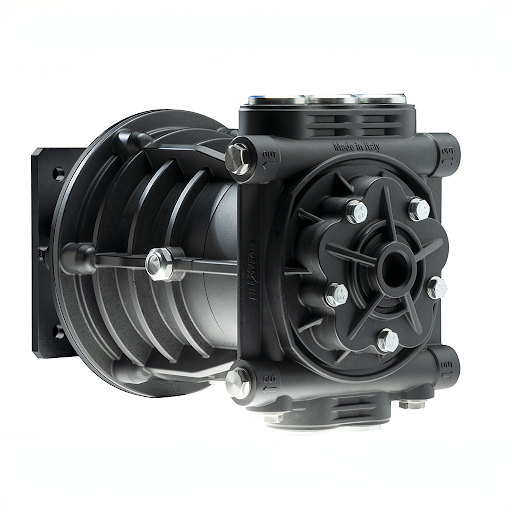
The oil should be completely changed every 500 operating hours or once a year, whichever comes first. This maintenance procedure is essential to ensure proper lubrication of internal components and prevent premature wear.
Important note regarding the first oil change: The first oil change must be performed after just 50 hours of operation. This initial service is essential for removing any manufacturing residues, metal filings, and impurities that may be present in new components during the break-in period.
Preparation for the procedure:
Before proceeding with the replacement, you must:
- Place the machine on a perfectly level surface
- Let the pump run briefly so that the oil warms up slightly (this helps ensure that all the oil drains out)
- Turn off the pump and disconnect the power supply
- Wait a few minutes to allow the oil to settle
Replacement procedure:
- Prepare a container of sufficient capacity to collect the used oil
- Unscrew the drain plug located at the bottom of the pump housing
- Unscrew the upper fill plug
- Allow the used oil to drain completely (this may take a few minutes)
- Visually inspect the condition of the oil: the presence of metal particles or a very dark color may indicate wear issues
- Tighten the drain plug securely
- Slowly pour in the new oil until the correct level indicated on the oil level indicator is reached
- For Alpha 1, it is 110 grams
- For Alpha 2, it is 210 grams
- For Alpha 3, it is 400 grams
8. Tighten the fill cap to the torque specified in the manual
Oil Specifications: Use only high-quality hydraulic oils with the characteristics specified in the manufacturer’s manual. As a general guideline, our high-pressure pumps use SAE 75W90 oil, as indicated in our manuals. Please contact us if you need to use a different type of oil.
Required amount: The amount of oil varies depending on the pump model and size. Consult the manufacturer’s manual for the exact amount required. It is always advisable to keep a small supply on hand for topping up.
Replacing the pump gaskets
Pump gaskets are wear parts and must be replaced every 1,000 operating hours to ensure proper sealing and prevent leaks. This procedure requires partial disassembly of the pump and a thorough understanding of the product’s mechanics. For this reason, it is essential to contact an authorized service center.
In addition to scheduled replacement, the gaskets must be replaced immediately if any of the following occur:
- Fluid leakage from the pump during operation
- Presence of fluid in the oil (visible through the level indicator)
- External oil leakage
- Sudden drop in pressure not attributable to other causes
Replacing the pump valves
The suction and discharge valves are critical components for the proper operation of the pump. Over time, the valve discs and their springs can wear out, compromising the pump’s efficiency. They should be replaced every 1,000 operating hours and must be replaced by an authorized service center.
The valves need to be replaced early if any of the following occur:
- Abnormal vibrations during operation
- Loss of pressure or flow rate
- Irregular operation with excessive pulsation
- Abnormal noises coming from the pump head
- Difficulty reaching maximum pressure
Maintenance of high-pressure pumps ensures long-term performance and reliability
Maintenance of high-pressure pumps should not be viewed as an occasional task, but rather as a genuine preventive strategy that helps reduce downtime, optimize operating costs, and maintain consistent performance over time. By following a structured program based on routine inspections and major maintenance at specific intervals, it is possible to prevent premature wear and promptly identify any anomalies before they develop into critical failures. This is even more critical for industrial and professional applications, where operational continuity is essential and any drop in pressure or flow rate can compromise the efficiency of the entire system.
At Mixtron, we develop high-pressure pumps built to last, made from high-strength engineering plastics and components carefully selected to ensure reliability even under the most demanding conditions. That is precisely why we combine high-quality construction with ongoing technical support, detailed manuals, and practical resources, such as our disassembly video tutorial, to help operators and maintenance technicians inspect every part of the product. If you would like to learn more about our procedures, request assistance, or find the original replacement parts best suited to your model, please contact us: our technical team is available to provide you with detailed guidance and expert support. Choosing Mixtron means relying on a competent and trusted partner, a leader in the manufacture of high-pressure pumps for professionals seeking high performance and long-term reliability.
You might also be interested in




Are you ready to experience innovation?
A wide range of cutting-edge technology solutions for any application