


Why dosing acids and aggressive liquids calls for a dedicated pump
Many industrial and agricultural processes require chemically aggressive substances to be dosed into water: acids, alkaline and corrosive products such as caustic soda, chlorine or surfactant-based detergents. These are liquids that, on prolonged contact, put the components of a doser under severe strain and therefore call for a dosing pump built to last over time.
An acid dosing pump, or a caustic soda dosing pump when the substance is alkaline, must combine two qualities: on one hand the precision of proportional dosing, and on the other a high degree of chemical resistance in the materials and seals that come into contact with the additive. In this article we look at the sectors where this need arises, the problems that dosing aggressive products entails, and the solutions Mixtron offers to ensure reliability and durability.
In which sectors are acids and aggressive liquids dosed
Dosing aggressive liquids is a common requirement across several sectors, each with its own critical substances.
The main one is water treatment and disinfection, where aggressive chemicals such as chlorine are used to disinfect water and make it safe. Closely related is the field of washing and industrial cleaning, in which alkaline detergents and surfactant-based soaps are dosed, also fairly aggressive towards the doser's components. A third significant area is fertigation: here, strongly acidic and corrosive additives are common, such as some of the fertilisers used to encourage rapid crop growth. In all these cases the dosed substance, however useful to the process, acts aggressively over time on the materials it comes into contact with.
The typical problems in dosing aggressive products
The main difficulty in dosing acids and aggressive liquids does not show up straight away. At first the doser works without any issue, but as time goes by the aggressive additive progressively attacks some of the doser's components, particularly those made from plastic materials. The result is a noticeable reduction in the service life of the doser, which ends up being replaced far sooner than expected.
This has a direct impact on operational continuity and on costs: frequent replacement of the doser means plant downtime and recurring expenses. For this reason, when dosing aggressive products, the chemical resistance of the materials and the protection of the most delicate parts become selection criteria every bit as important as dosing precision.
The technical characteristics to consider
To dose acids and aggressive liquids without running into rapid deterioration, the choice of doser should be guided first and foremost by the chemical resistance of its components.
The materials of the doser body
Mixtron dosing pumps are made from polypropylene (PP) and polyoxymethylene (POM), technical plastics selected to resist most of the additives used across the various sectors. This construction base ensures good compatibility with a wide range of products, but when the dosed liquid is particularly aggressive it is above all the choice of seals that determines the service life of the doser.
Extreme seals
The seals are among the components most stressed by direct contact with the additive. For the most aggressive liquids Mixtron recommends the Extreme version of the seals, able to withstand strongly acidic or alkaline additives. Fitting Extreme seals significantly extends the service life of the doser, reducing the frequency of replacements and the associated downtime.
Mixtron's solution for the most critical cases: the ByPass version
When the product to be dosed is particularly aggressive, or when there is uncertainty about its compatibility with the doser's materials, Mixtron always recommends the ByPass version.
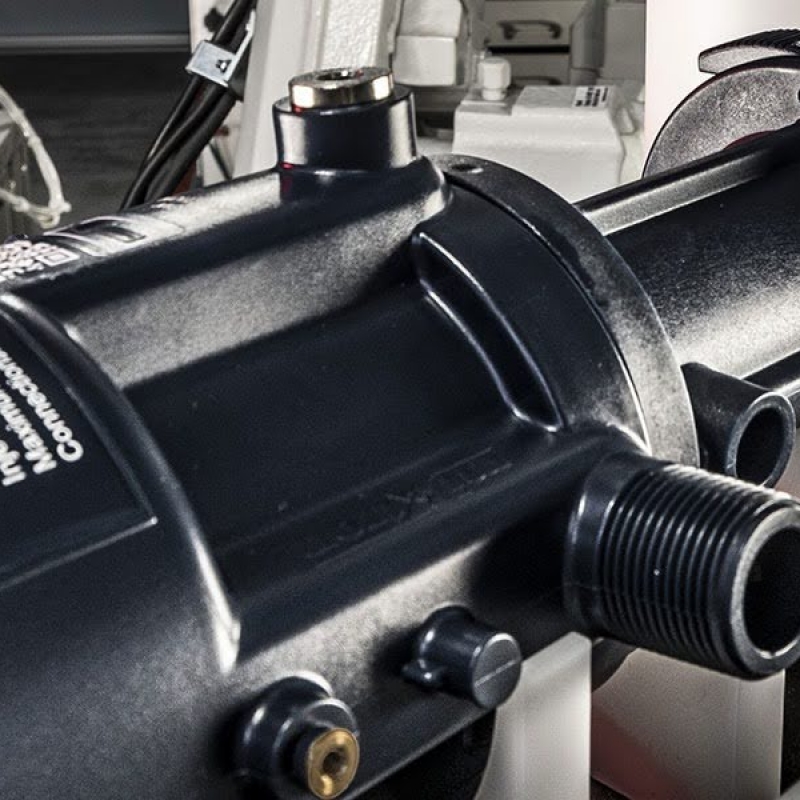
The ByPass is an additional pipe inside which the additive is mixed with the water: in this way the aggressive product is mixed in a dedicated conduit, without rising to the upper part of the doser, where the motor body is located. The dosing rate remains identical to that of a standard doser, but the aggressive liquid does not come into contact with the motor and therefore does not damage its components. The result is effective protection of the most delicate part of the doser and a significantly longer service life, even with corrosive additives.
The ByPass option is available across the entire Mixtron range, with the exception of the models with a dosing range from 1% to 10%. Combined with the Extreme seals, it is the most suitable configuration for safely handling the dosing of acids and aggressive liquids, and it represents a sound alternative to competing dosers made from PVDF plastic, which are certainly far more expensive.
Reliability over time, even with the most difficult products
Dosing acids and aggressive liquids does not mean resigning yourself to replacing the doser often. With the right configuration, a need that starts out as a weak point turns into a reliable, durable process, in which resistance over time becomes an integral part of the solution and protects the company's investment.
The key lies in matching the doser to the product actually being used, and this is exactly where Mixtron's experience comes into play. When there is uncertainty about the nature or the aggressiveness of the additive, the company's technical support helps identify the right combination of materials and accessories, to achieve precise dosing with no compromise on durability. To define the configuration best suited to your process, speak to the Mixtron experts: dosing solutions designed and manufactured entirely in Italy, built to work over the long term even in the most chemically demanding conditions.
You might also be interested in




Are you ready to experience innovation?
A wide range of cutting-edge technology solutions for any application